The Diary · October 26, 2026 · 5 min read
Taking Mary Home
She left Liverpool in her twenties and spent over sixty years trying to get back. So this summer, a year after she died, we took her in my uncle's carry-on, which is probably not how she imagined it.
By Kenda Hansen
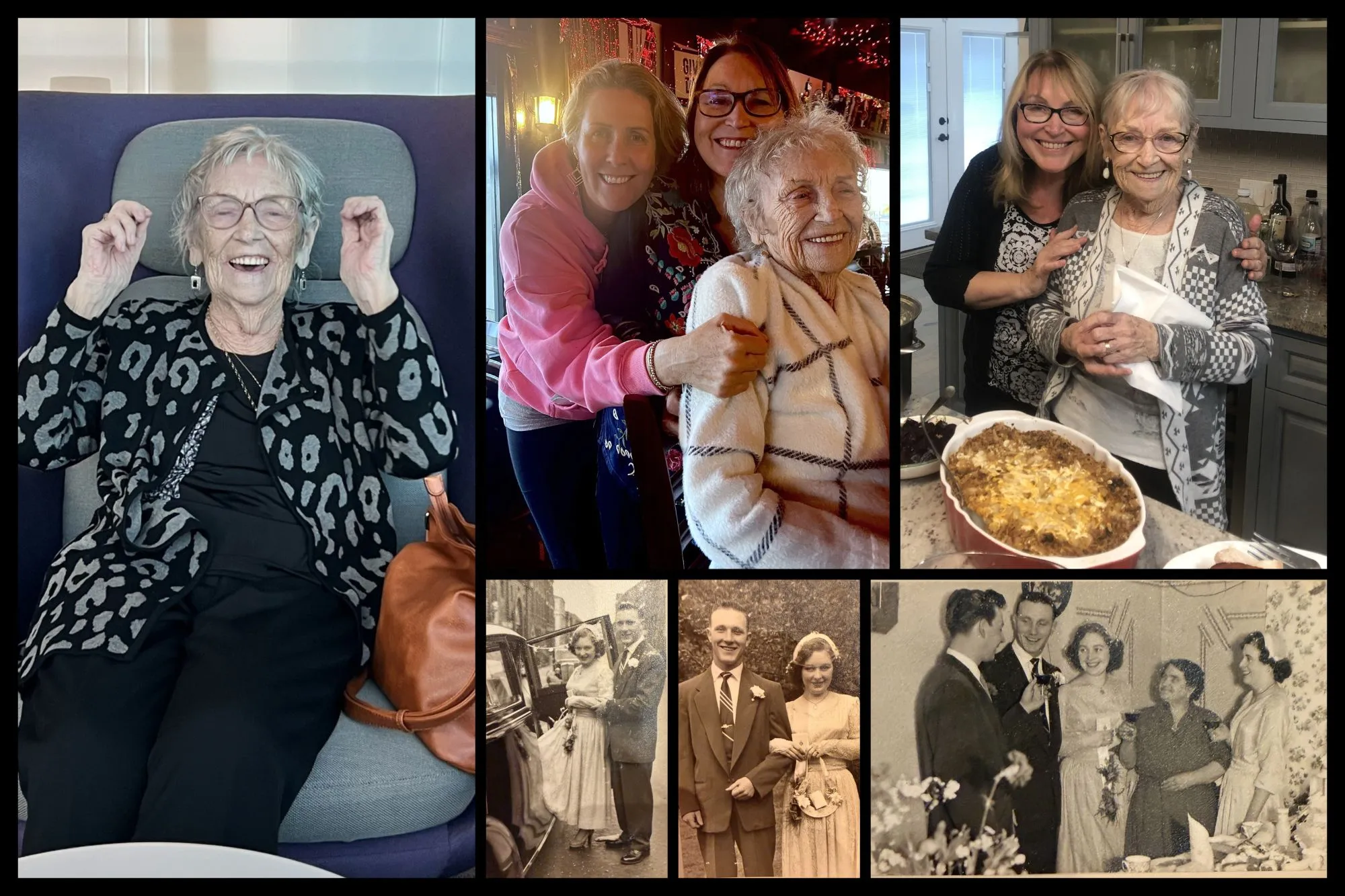
My grandmother spent most of my life telling us two things: that she didn’t like Americans, and that when she died she wanted her ashes in the Mersey. She said both of these to a room full of Americans she had raised. In England we take ownership of our people. Nobody is Ann or Kenda, it’s our Ann, our Kenda, and once you’re an our, you don’t get out. She left Liverpool in her twenties and spent over sixty years trying to get back. So this summer, a year after she died, we took her in my uncle’s carry-on, which is probably not how she imagined it.
My grandpa signed every card he ever gave her love, me ole mate. When he died, I took over the job. Every card I sent her after that, birthday, Christmas, no reason at all: love, me ole mate. I was her first grandchild and we adored each other from the start. She always said that when she died she hoped she’d come back as me. She used to tell a story about when I was little. She would sing, and I would rub her face and say, sing again. My cousin would hit her and say, stop singing. I think that’s the day she picked which one of us she was coming back as.
When I was sixteen, my grandma and I climbed the Liverpool Cathedral together, past a sign that said DO NOT ENTER, all the way up to a window the size of a person. A monk found us up there and said we really shouldn’t be there. She was sixty-six. She looked at him and said, oops, we got lost. We were not lost.
At the end of her life she was in hospice at home, surrounded by her people. Her bed sat in the middle of the living room, aimed at the TV, and she was in and out. As the end came closer she stopped eating, so I’d walk to the local bakery and bring back a scone or a treat and she might take a nibble. The television was on the conclave, because of course it was. She was a devout Catholic, a Eucharistic minister at her church for years, and she had one instruction for the Vatican: whatever they do, they better not make it an American pope. Then the white smoke. She surfaced long enough to ask me who it was. I am not Catholic. I am an agnostic who loved her, and I did what any agnostic does at a Catholic deathbed. I lied. It’s an English pope, Grandma. I figured if there was a God she’d find out shortly. I also figured she’d forgive me. Toward the end she had started saying things like, we’re all just stardust, which is not in the catechism. She’d started believing what felt right to her, and she said so. Sitting next to that bed with a bakery scone in my lap, I was as home as I have ever been.
I made the trip over the pond with my older sons, my nephew, my uncle, and Kylen. Three generations. Four if you count Mary, and she would have insisted.
I’d warned Kylen about the Liverpudlian sense of humor. It is not for the faint of heart, and you will be teased mercilessly. It’s how you know we like you. It took about four minutes. We walked into the tiny pub my great-grandfather frequented, the Carnarvon Castle, there since 1859. It was the middle of a heat wave, and Kylen was in a pair of short shorts, and I’m being generous calling them shorts and not briefs. Two gentlemen at the bar, eighty if they were a day, looked him up and down, and one of them said, hey doll, nice legs. Let me buy you a drink.
Kylen turned to me. I think I’m with my people.
The night before the funeral I told my sons we were getting up early to take their great-grandmother to the river. Be ready. Liverpool is a party town and my sons are my sons, so they rolled in around six in the morning and appeared at breakfast looking pasty and exhausted. I was seriously going to kill them. My cousin Liz, who is in her sixties and has a heart, said, oh come on Kenda, be kind, let them go back to bed.
No. They will suffer. They knew. They will suffer. Suck it up, boys, we’re going on the ferry.
My cousins and the rest of the family joined us, and we all boarded the ferry across the Mersey. The actual one. My grandmother’s cousin was Gerry Marsden, who wrote the song, so this was less a ferry ride than a family heirloom with a diesel engine. Somebody hummed it. Somebody always hums it. Everyone on that deck was somebody’s our. Two members of our party were quietly negotiating with their stomachs. Kylen had warned me before we left. Whatever you do, he said, don’t throw the ashes into the wind.
I read her eulogy standing on that deck. I got through it, and by the end I was sobbing and not thinking straight, which is my only defense for what happened next.
We threw the ashes into the wind.
She got all over everybody. Coats, hair, a cousin’s glasses, and two hungover grandsons. The whole family laughed. Of course they did. Of course she wasn’t ready to leave us yet. There is a version of this story where it’s a disaster, and there’s the version where Mary, who never once in her life stayed where you put her, made one last pass through the whole family on her way out. I’m going with that one.
Then Galway, where her people came from, a place I’d never been. We’re McDonoughs on that side, and Galway is very aware of it. The name was on pubs, shops, a van. I’d point at every one like I’d personally earned it. The family had a fish and chip shop there, and during the famine my great great great grandmother, Mary McDonough, walked across Ireland to get on a boat to Liverpool. A lot of Ireland made the same walk, which is why they call Liverpool the capital of Ireland. She started a long line of Marys that runs straight down to the one in my uncle’s carry-on. I stood at the edge of the water and understood I was looking at the same thing we had been looking at for generations. Same sea, same gray, same wind coming off it. You could feel the pull of it. The Latin Quarter was magic, music coming out of every door, laughter in the street, and everywhere you went somebody started up a conversation and nobody let you leave it early. Something in me went quiet there. No ruminating, no wishing I were somewhere else, none of the usual noise. Just calm, completely at ease, and somehow familiar, like I had been there before and my body remembered.
You have one of these. Somebody who claimed you, who said our in front of your name and never took it back. Maybe they’re gone, maybe they’re in a living room somewhere with the TV on. Go see them. Bring a scone.